








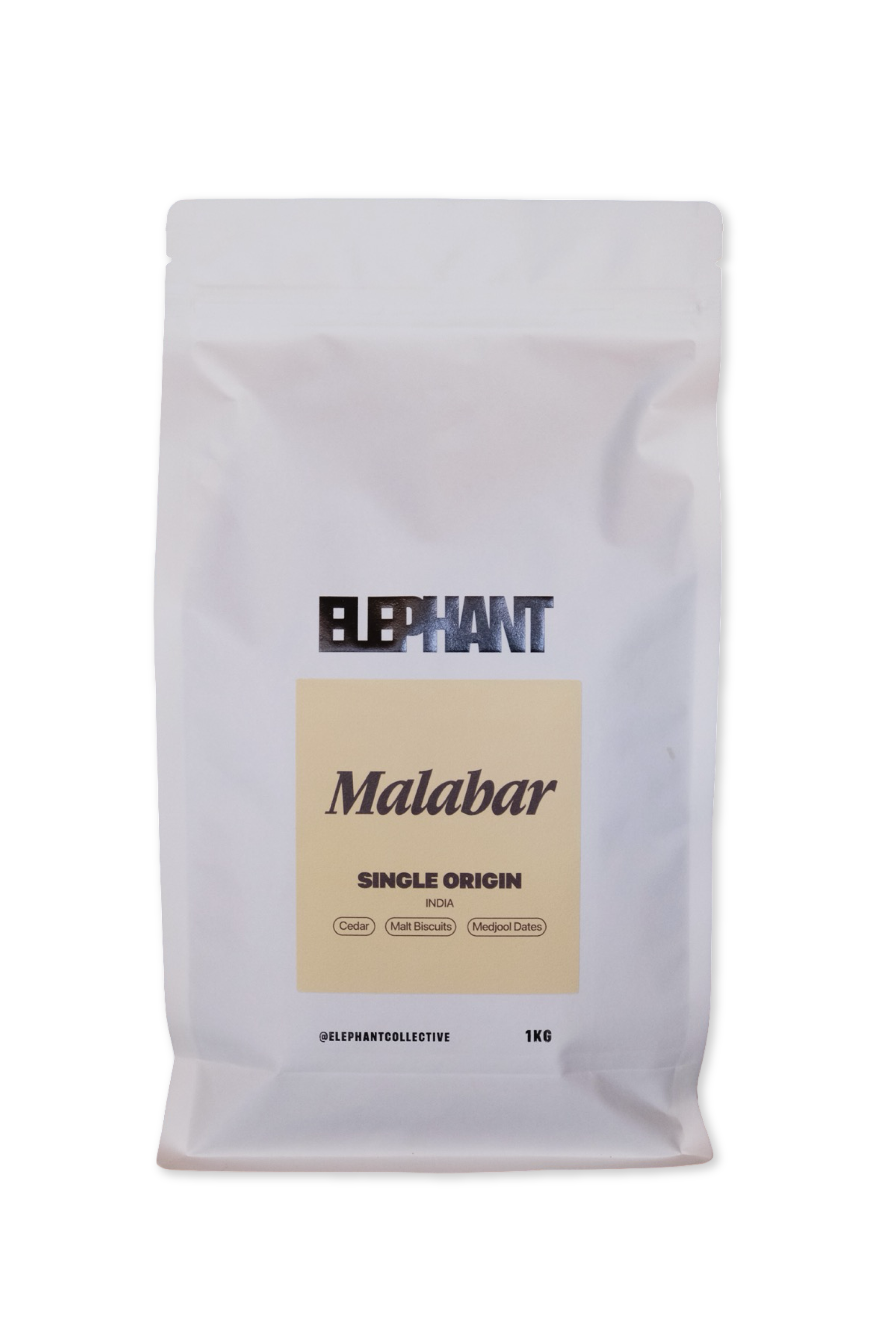

Malabar, India
Cedar, Malt Biscuits, Medjool Dates.
Monsoon Malabar is one of those coffees that just doesn’t play by the usual rules. Exposed to the humid monsoon winds along India’s southwest coast, the beans swell, soften, and completely transform in character. The result is a low-acid, full-bodied coffee with heavy, earthy depth, subtle spice, and a smooth, rounded finish. It’s bold without being sharp, making it an easy drinker for those who want something rich, mellow, and a little bit different.
Producer - Various
Region - Karnataka
Altitude - 1100-1200
Varietal - Catimor, Caturra, Kent, S795
Process - Monsooned
Roast Level - ◉◉◉◉◎
Ratio: 15 g coffee → 250 ml water (≈1:16.7)
Temp: 94 °C
Grind: Medium-fine (like table salt)
Total brew time: 2 ½–3 min
Steps
- Prep – Rinse filter with hot water, discard rinse.
- Add coffee – 15 g ground coffee in brewer.
- Bloom – Pour 40 ml water, let sit 30 s.
- Pour – Slowly add the rest (up to 250 ml) in circles by 1:30.
- Wait – Let it drain; total time around 2:45.
- Swirl & sip – Expect citrus brightness, caramel sweetness, chocolate finish.
- We recommend consuming the coffee within three months (unopened).
- Once opened, we recommend using within 7 days.
- Store in a cool, dry place.
Ships within 1-3 working days.
Coffee Origins
KARNATAKA - INDIA
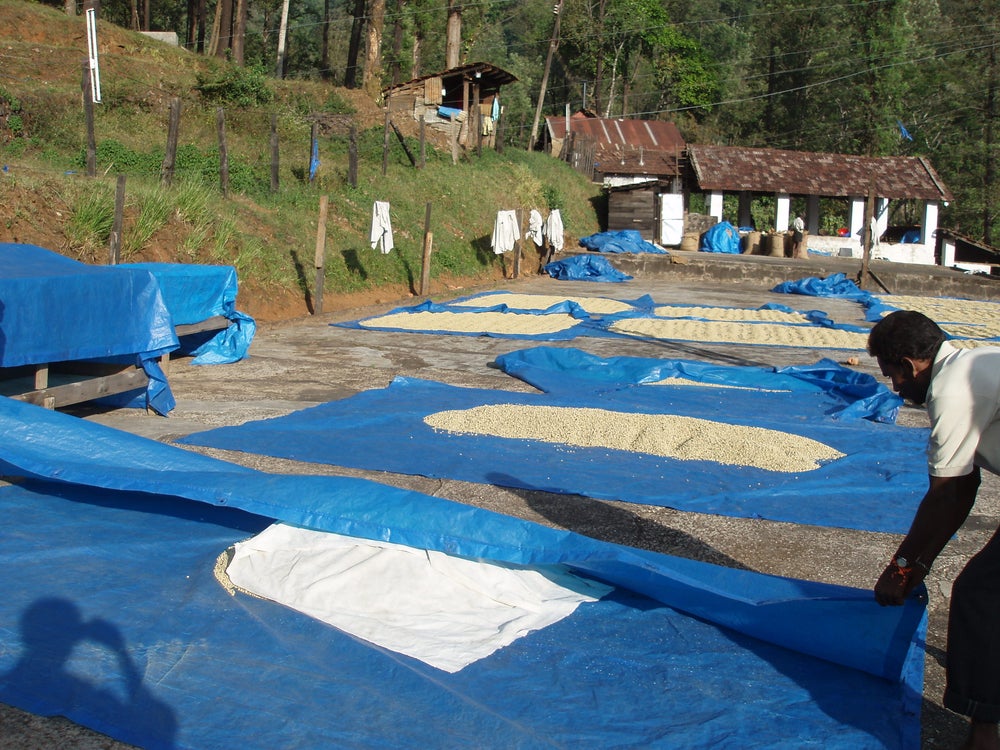
Karnataka is the heart of India’s coffee production, accounting for the majority of the country’s output. Grown across regions like Coorg, Chikmagalur, and Bababudangiri, the coffee thrives under dense shade in the Western Ghats, where high rainfall, rich soils, and steady elevations create ideal conditions. This environment produces well-structured, balanced coffees, typically with notes of chocolate, gentle spice, and soft fruit, alongside a smooth body and moderate acidity that make them highly versatile across different brewing styles.
Process
Monsooned
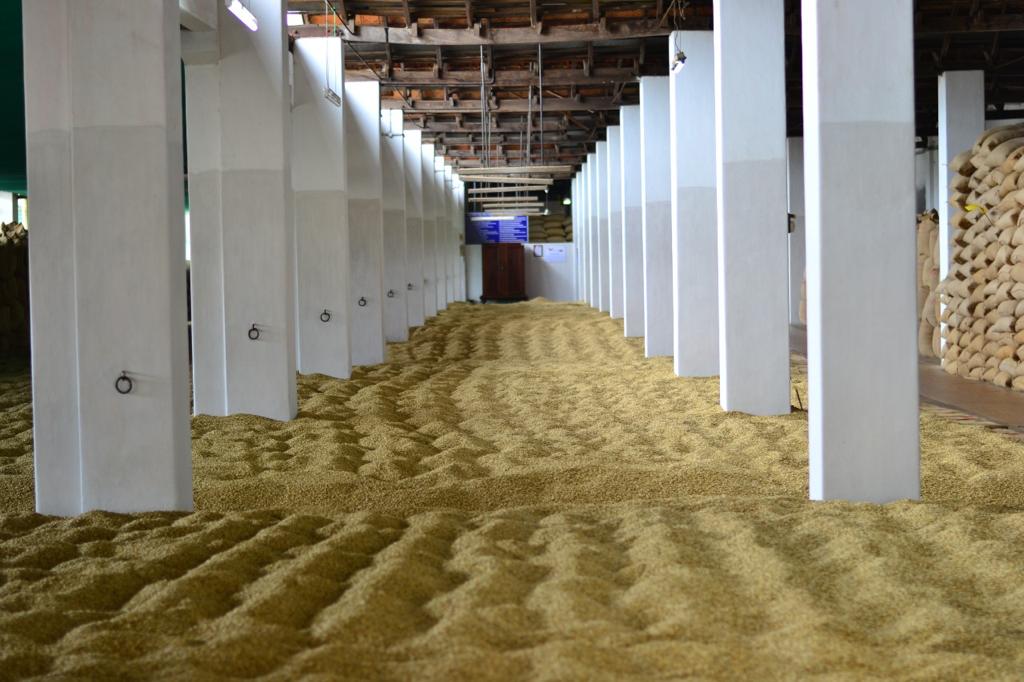
Monsoon Malabar coffee undergoes a completely unique process shaped by the coastal climate of southwest India. After harvesting and drying, the beans are exposed to the seasonal monsoon winds for several weeks in open-sided warehouses. During this time, the beans absorb moisture from the humid air, causing them to swell, pale in colour, and lose acidity. They are regularly raked, turned, and re-bagged to ensure even exposure and consistency across the lot. This extended interaction with the monsoon conditions transforms the coffee’s structure and flavour, resulting in a low-acid, heavy-bodied cup with deep, earthy character and a smooth, mellow finish.